Power of Massage

Christopher Leslie, OCR Diploma in Sports Massage
Treatments £50 an hour Tel: 07941090686
How can massage help these conditions? FAQs
Diploma in Pastoral Care, Guidance and Counselling
Member of the Sports Massage Association, Massage Training Institute and BackCare
|
Monday Tuesday Wednesday Thursday Friday Saturday Sunday |
9 am - 7 pm 9 am - 7 pm 9 am - 7 pm 9 am - 7 pm 9 am - 7 pm 9 am - 12 noon Closed |
Acute and chronic pain such as back, neck and shoulder pain can be heped with a deep tissue or Thai massage.
It works by targeting the deeper layers of muscle and connective tissue rather than just the surface. There’s a clear reason it helps with muscle pain.
At the core, it improves blood flow. When a therapist applies slow, firm pressure, it increases circulation in tight or injured areas. Better blood flow brings oxygen and nutrients to the muscle, which supports healing and helps flush out metabolic waste that can contribute to soreness.
Sports massage is a bit more targeted than general or even deep tissue massage—it’s designed specifically around how muscles get used (and overused) in activity, and how injuries develop.
One of the main ways it helps is by improving circulation to injured or stressed tissue. Better blood flow brings oxygen and nutrients that support repair, while also helping clear out waste products that build up after intense activity. This can speed up recovery, especially in minor strains.
It also helps manage scar tissue. After an injury, your body lays down new fibers to heal, but they’re often disorganized at first. Sports massage can help realign that tissue, making it more flexible and less likely to restrict movement or cause ongoing pain. This is especially useful in injuries like a muscle strain.
Another key benefit is restoring range of motion. Injured muscles tend to tighten up as a protective response, which can lead to stiffness and imbalance. By working on those areas, sports massage helps reduce muscle tension and improves flexibility, so you can move more normally again.
It can also reduce the risk of further injury. When one muscle group is tight or weak, others compensate, which puts extra stress on the body. Regular sports massage helps keep muscles balanced and functioning properly, lowering the chance of repeat issues.
There’s also a pain-relief effect. Massage stimulates the nervous system in a way that can dampen pain signals and promote relaxation, which can make injuries feel more manageable while they heal.
That said, timing matters. Sports massage is great for recovery and rehab, but it’s not ideal immediately after an acute injury (like right after a tear or severe sprain), when inflammation is high. In those cases, rest and medical evaluation come first.
If you want, tell me what kind of injury you’re dealing with—I can explain how useful sports massage would be in that specific case and when to use it.
Sciatic Pain
Massage can help with sciatica, but it depends on the cause of your pain.
When massage does help
Massage is most useful if your sciatic pain is linked to muscle tightness, especially in the lower back, hips, or the piriformis muscle (a common culprit). It can:
- Reduce muscle tension pressing on the nerve
- Improve blood flow and healing
- Ease stiffness and improve mobility
- Provide short-term pain relief
Techniques like deep tissue massage, trigger point therapy, or myofascial release are often used.
When it’s less effective
If your sciatica is caused by something structural—like a slipped (herniated) disc—massage won’t fix the root problem. It may still reduce surrounding muscle tension, but the relief is usually temporary.
How to use massage safely
- Start gently—deep pressure too early can aggravate symptoms
- Avoid direct pressure on the spine itself
- Combine massage with stretching and movement for better results
- If you see a therapist, choose someone experienced with nerve pain or physiotherapy
When to be cautious
Avoid massage or get medical advice first if:
- Pain is severe or worsening
- You have numbness, weakness, or tingling down the leg
- You’re unsure of the cause
Bottom line: Massage can be a helpful part of managing sciatica—especially for muscle-related causes—but it works best alongside exercises and proper treatment, not on its own.
If you book an appointment, I can show you a quick daily routine (stretching + massage) that targets sciatic pain specifically.
Anxiety and Stress
Massage can be surprisingly effective for easing anxiety and stress—not just because it feels good, but because it changes what’s happening in your body and mind.
At a physical level, massage helps calm the fight-or-flight response. When you’re stressed, your body produces more cortisol (the stress hormone) and your muscles stay tense. Massage encourages relaxation by lowering cortisol and increasing “feel-good” chemicals like serotonin and dopamine. This shift supports the parasympathetic nervous system, which slows your heart rate, deepens breathing, and tells your body it’s safe to relax.
It also works directly on muscle tension. Stress often shows up as tight shoulders, a stiff neck, or headaches. By loosening these areas, massage reduces the physical discomfort that can actually feed back into anxiety—breaking that cycle.
There’s also a mental effect. The focused, repetitive touch can act almost like a form of mindfulness, helping you stay present instead of spiraling into worries. For some people, it creates a similar calming effect to practices like meditation.
Another underrated benefit is improved sleep. When your body is more relaxed and your stress hormones are lower, it’s easier to fall asleep and stay asleep—which in turn helps regulate mood and anxiety over time.
That said, massage isn’t a cure-all. It works best as part of a broader approach that might include movement, talking therapies, or stress management techniques. If anxiety is intense or persistent, it’s worth combining massage with other support.
If you would like further advice, I can suggest specific types of massage (like Swedish vs deep tissue) depending on what you’re dealing with.
Headaches
Massage can help relieve certain types of headaches, but it depends on the cause.
For tension headaches (the most common type), massage is often quite effective. These headaches are linked to tight muscles in the neck, shoulders, and scalp. Techniques that relax those areas can reduce both pain and frequency.
Massage may help by:
- Loosening tight muscles in the neck and upper back
- Improving blood flow
- Reducing stress (a major trigger for headaches)
- Lowering levels of pain-related tension in the body
It can also help some people with migraine, especially when stress or muscle tension is a trigger—but it won’t stop all migraines, particularly those driven by neurological or hormonal factors.
That said, massage is less useful for headaches caused by things like:
- Dehydration
- Eye strain
- Illness or infection
- High blood pressure
A few simple techniques you can try yourself:
- Gently press and rub the temples in small circles
- Massage the base of your skull where the neck meets the head
- Apply pressure to the area between your thumb and index finger
- Use heat (like a warm compress) on tight neck muscles
If headaches are frequent, severe, or getting worse, it’s worth speaking with a healthcare professional to rule out underlying issues.
If you would like further advice, tell me what your headaches feel like (location, duration, triggers), and I can suggest more targeted approaches.
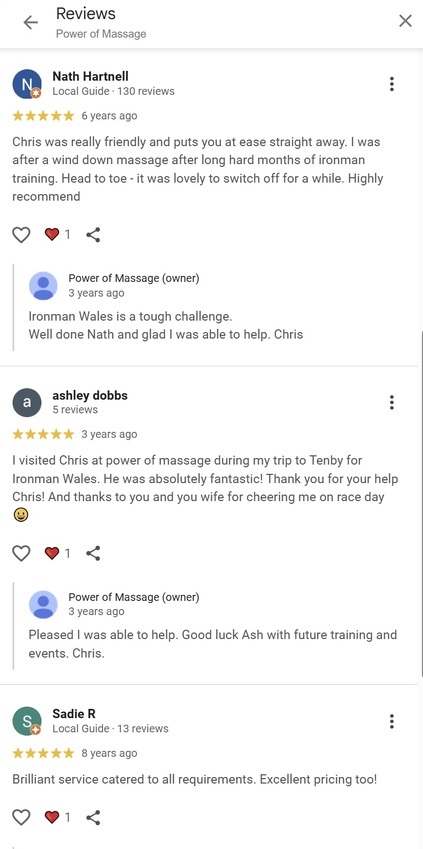
Training Pre and Post Event
Typical timing recommendations
- Heavy training blocks: every 2–4 weeks if useful
- Before event: light session 2–5 days beforehand
- After event: gentle recovery massage 24–72 hours later
- Deep tissue work: ideally not right before a key race
If I know what event you’re training for and what kind of training load you’re doing, I can give more specific guidance on timing and frequency.
Surgery Rehabilitation
Massage can help with recovery after surgery, but it depends a lot on timing and the type of surgery.
In general, gentle forms of massage can support healing by improving circulation, reducing swelling, easing muscle tension, and helping with pain. Techniques like Manual Lymphatic Drainage are often used after surgery to reduce fluid buildup (edema), especially after procedures like orthopedic or cosmetic surgery.
That said, there are some important cautions:
- Scar tissue management: Later in recovery, targeted massage can help soften and improve the flexibility of scar tissue, but it should only begin once the incision is fully healed.
- Medical clearance is key: Always check with your surgeon or doctor before starting massage.
A safer approach is:
- Early stage: light movement and possibly very gentle lymphatic techniques (only if approved)
- Mid to late stage: gradual introduction of soft tissue massage around—not directly on—the area
- Later stage: scar tissue work and deeper techniques if needed.
Back to top
Menopause
Massage can be a helpful supportive tool during menopause—but it won’t change the underlying hormone shifts. What it can do is ease many of the secondary symptoms that come with that transition.
Here’s how it tends to help:
Stress and mood swings
Hormonal changes during menopause can affect the nervous system and increase stress, anxiety, or irritability. Massage helps activate the parasympathetic (“rest and digest”) response, lowering cortisol and promoting relaxation. Many people notice improved mood and better emotional balance afterward.
Sleep problems
Insomnia is common in menopause. Massage can improve sleep quality by calming the nervous system and reducing physical tension.
Muscle and joint aches
Declining estrogen levels can contribute to stiffness and discomfort. Massage helps increase blood flow, loosen tight muscles, and improve flexibility, which can reduce aches and pains.
Circulation and fluid retentionSome women experience swelling or a heavy feeling in the limbs. Gentle techniques, including Manual Lymphatic Drainage, may help move excess fluid and improve circulation.
Headaches and tension
Tension headaches can become more frequent during menopause. Neck, shoulder, and scalp massage can reduce muscle tightness that contributes to them.
Body awareness and relaxationMenopause can feel physically and emotionally unsettling. Regular massage can help you reconnect with your body in a positive way and reduce overall tension levels.
What massage won’t do
It won’t directly stop hot flushes or regulate hormones—but by reducing stress, some people find their symptoms feel more manageable.
Things to keep in mind
- Choose a therapist experienced in working with midlife or hormonal changes if possible
- Communicate about sensitivity (some people feel more tender during menopause)
- Stay hydrated after sessions
- If you have conditions like osteoporosis or cardiovascular issues, techniques may need adjusting.
Back to top
Phobias
Massage can help with the symptoms around phobias—but it doesn’t directly treat the phobia itself.
Phobias are rooted in how the brain processes fear (often linked to conditioning and the threat response), so the most effective treatments are psychological approaches like Cognitive Behavioral Therapy, especially exposure-based therapy
Where massage can help is alongside that:
Reducing the physical fear response
When a phobia is triggered, the body goes into fight-or-flight (rapid heart rate, muscle tension, shallow breathing). Massage helps calm the nervous system, making it easier to come out of that heightened state.
Lowering baseline anxiety
If your general stress levels are lower, phobic reactions can feel less intense. Regular massage can reduce overall anxiety and improve resilience.
Improving body awareness
Massage can help you notice early signs of tension or anxiety in your body, which can make it easier to use coping strategies before the fear escalates.
Supporting sleep and recovery
Better sleep and relaxation can indirectly improve how you handle fear and stress.
What it won’t do
Massage won’t “remove” a phobia or retrain the brain’s fear response. For that, structured therapy—again, typically CBT with gradual exposure—is key.
Massage during pregnancy
Gentle massage during pregnancy is generally considered safe and can be very helpful, as long as it’s done at the right stage.
Potential benefits
Gentle prenatal massage can:
- Ease back, neck, and hip pain as your body changes
- Reduce swelling in the legs and feet
- Improve sleep and relaxation
- Lower stress and anxiety
- Help with muscle tension and posture
Techniques are usually adapted (often called Prenatal Massage), focusing on comfort and safety rather than deep pressure.
Important safety points
- Check with your midwife or doctor first, especially if you have a high-risk pregnancy
- Avoid the first trimester - I do not treat during this time as a precaution
- Positioning matters: lying flat on your back for long periods isn’t recommended later in pregnancy—side-lying or supported positions are safer
When to avoid or delay massage
You should get medical advice first if you have:
- High blood pressure or Pre-eclampsia
- Risk of blood clots
- Severe swelling, pain, or headaches
- Any complications or concerns about the pregnancy